
archive

MATE AS A PEDAGOGICAL TOOLKARIM-YASSIN GOESSINGER
(AUT)
Workshop, Conversation, Research, education, tea, decolonial perspectives
Tea has been one of the most popular commodities in the world. Over centuries, profits from its growth and sales funded wars and fueled colonization, and its cultivation brought about massive changes in land use, labor systems, market practices, and social hierarchies, the effects of which are with us even today.
Tea was among the earliest colonial industries in which merchants, planters, promoters, and retailers used imperial resources to pay for global advertising and political lobbying. The commercial model that tea inspired still exists and is vital for understanding how politics and publicity influence the international economy.
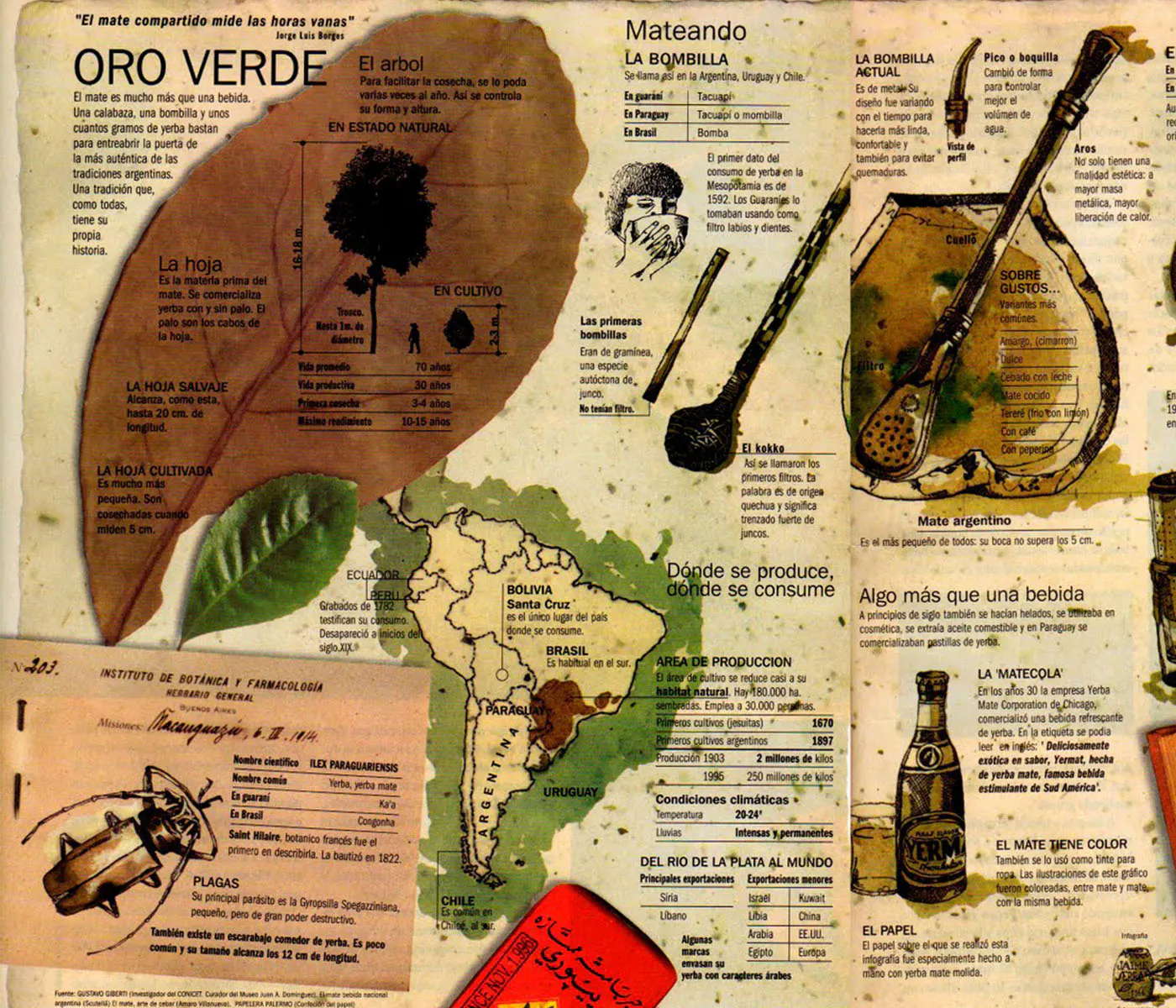
There is yet another tea-related history to be told. In 1616, Hernando Arias de Saavedra, the governor of the Spanish province that included Buenos Aires, banned the local population from drinking a green herbal drink called yerba mate. The governor had seen the region's indigenous Guaraní people carrying this drink with them everywhere they went.
It was a filthy vice that had to be outlawed, the Spanish had decided. "All Spaniards, men and women, and all Indians, drink these dusts in hot water," one dismayed Jesuit priest wrote, lamenting, "And when they don't have with what to buy it, they give away their underpants and their blankets ... When they stop drinking it they fade away and say they cannot live."
The year 2011 saw the formation of Circle of Drink, now a globally recognized Community of Materos (Mate drinkers) who have a profound respect for the drink, seeing it not only as an herb to be consumed, but a lifestyle that promotes peace, togetherness, and equality beyond race, class, gender — all social barriers.
Just like a text can spark interpretations, commentary and critique, so does tea invite slowing down, being present and listening inside the classroom, and beyond. The fascinating thing about Mate is that it has accompanied returning migrants from South America to the Middle East, notably to the Levant, in the 50s and 60s. It spans the Atlantic and has helped form communities on both sides of it.
Mate as a pedagogical tool proposes to both critically and creatively examine the role Mate has played in the modern world and how it can foster communal learning/being and the reassembling of the social.
Karim-Yassin GOESSINGER has been based in Cairo, Egypt for the past six years. In 2013, he founded the Cairo Institute of Liberal Arts and Sciences (CILAS). He has been involved with CILAS as Programme Director and Teaching Fellow in the Social Sciences and Humanities. In parallel, he has taught Sociology at the American University in Cairo, and advocates context-specific liberal arts education in an effort to decolonize higher education. As an educator, Karim-Yassin combines his background in philosophy and urbanism with practicing Qi Gong, serving tea, including Mate, and cooking with others. He is currently hosting a course on the promises and limitations of modern/colonial science at CILAS in Alexandria, Egypt.